What Records Should Landlords Keep to Support an Eviction Case?
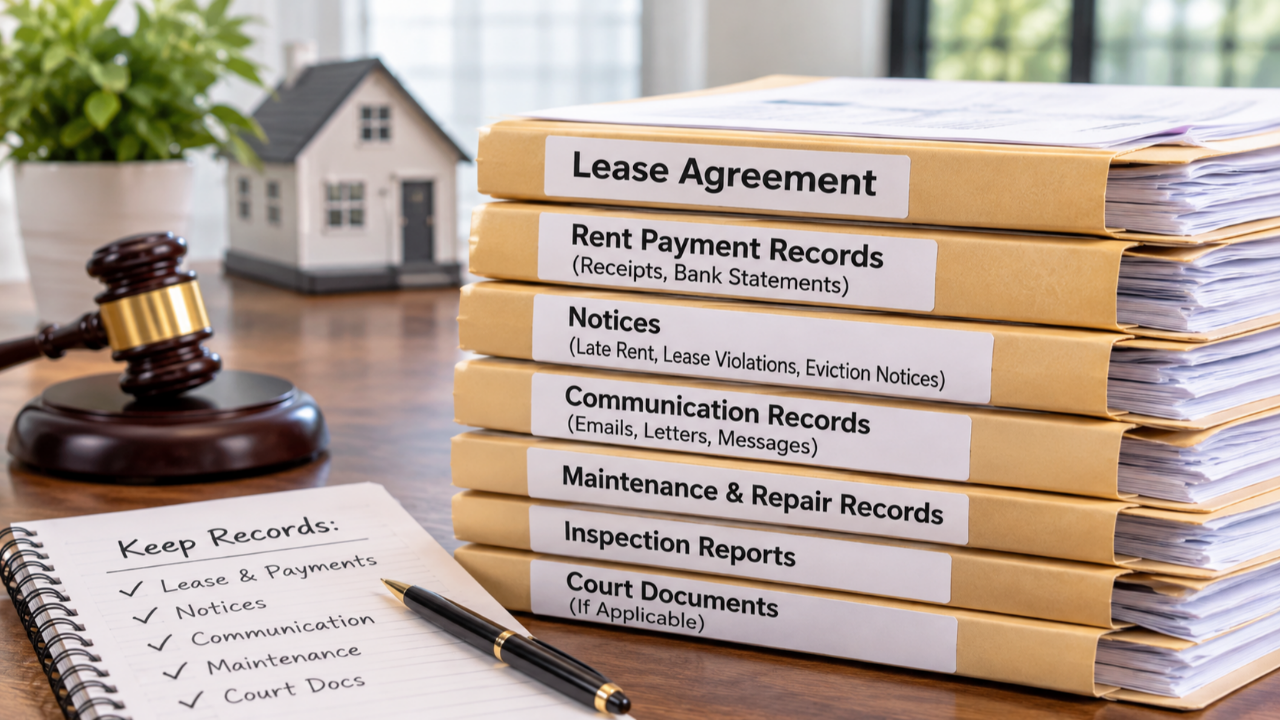
Evicting a tenant can be a complicated legal process, especially in California, where landlords must follow specific procedures before recovering possession of a rental property. Whether the issue involves unpaid rent, lease violations, or other legally recognized reasons for eviction, proper documentation can significantly affect the outcome of a case.
Keeping accurate and organized rental records helps landlords establish facts, demonstrate compliance with legal requirements, and support their claims in court. Understanding which documents matter most can also help property owners avoid unnecessary delays and costly disputes.
1. Lease Agreements and Rental Contracts
A signed lease agreement is one of the most important documents landlords should maintain. It establishes the rental relationship and outlines the responsibilities of both parties. Landlords should retain the original agreement, including any amendments, renewals, or written modifications.
Important details include the monthly rent amount, payment deadlines, occupancy restrictions, and property maintenance responsibilities. If an eviction involves an alleged lease violation, the agreement may help establish which contractual obligation the tenant failed to meet.
2. Rent Payment Records and Financial Statements
When pursuing an eviction for unpaid rent, landlords need reliable financial documentation.
Useful records include:
- Rent ledgers showing charges, payments, and outstanding balances
- Bank statements or receipts confirming payments
- Records of late or partial payments
- Written communications concerning overdue rent
These documents can help establish the amount allegedly owed and whether the tenant received proper credit for payments. California landlords should also distinguish unpaid rent from fees or other charges that may not legally support a nonpayment eviction.
3. Written Notices and Proof of Service
California eviction procedures generally require landlords to provide legally appropriate notices before filing an unlawful detainer lawsuit. Depending on the circumstances, these may include a three-day notice to pay rent or quit, a notice to cure a lease violation, or another legally authorized termination notice.
Landlords should preserve copies of every notice and documentation showing when and how it was served. Improper notice or service can delay or undermine an eviction case, even when the landlord has a legitimate reason to seek possession.
Read more: Legal Requirements and Best Practices for Serving an Eviction Notice
4. Communication Records With Tenants
Emails, text messages, letters, and other written communications may provide valuable evidence during eviction proceedings.
For example, messages might document repeated complaints, discussions about unpaid rent, or attempts to resolve lease violations.
Landlords should preserve complete conversations rather than isolated statements. These records may help establish timelines, demonstrate previous warnings, and clarify whether the parties reached any agreements.
Read more: Are Emails and Text Messages Admissible as Evidence in Rental Disputes?
5. Property Inspection Reports and Photographs
When an eviction involves alleged property damage or unauthorized alterations, inspection reports and photographs may help support the landlord's claims. Dated photographs, maintenance reports, contractor assessments, and repair invoices can document property conditions.
However, landlords must respect tenant privacy and comply with California's lawful entry requirements when conducting inspections.
6. Court Documents and Supporting Legal Records
Landlords should maintain copies of eviction-related court filings, service documents, hearing notices, and court orders. They should also preserve records supporting compliance with applicable state and local eviction protections, including any required just-cause documentation. Organizing these materials chronologically can make it easier to prepare for hearings and respond to disputed facts.
Final Thoughts
Successful eviction cases depend on more than a landlord's belief that a tenant violated the lease. They require legally sufficient grounds, proper procedures, and credible supporting evidence. By maintaining complete lease agreements, financial records, notices, communications, and property documentation, California landlords can better protect their interests. Good recordkeeping does not guarantee an eviction will succeed, but it can help landlords present a clearer case while respecting tenants' legal rights.
For legal help in California and your other needs, contact BERYS LAW on this page. We also offer courses on real estate investing, landlording, and templates right here!
Stay connected with news and updates!
Join our mailing list to receive the latest news and updates from our team.
Don't worry, your information will not be shared.